
Making the business case for on-site hydrogen investment: Beyond simple cost per kilogram
Organisations across APAC are under growing pressure to decarbonise while keeping operations stable, safe and commercially viable. Hydrogen is becoming part of this transition, but many early conversations still focus on one narrow question: how much does hydrogen cost per kilogram?
It is an understandable question, but it rarely gives the full picture.
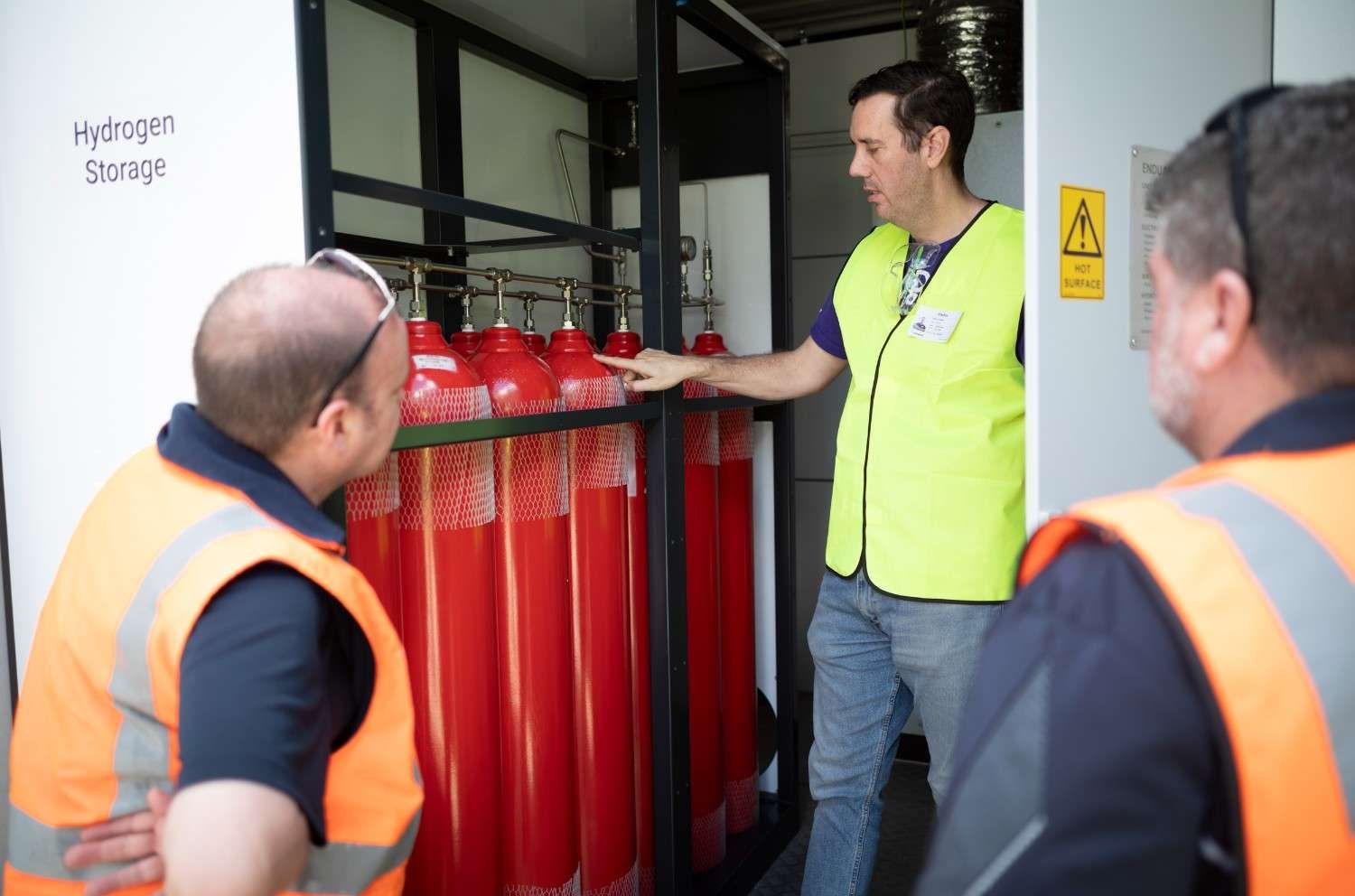
Hydrogen’s commercial value is shaped by more than production cost. When hydrogen is produced on site, many of the traditional cost barriers fall away. Transport disappears. Storage requirements shrink. Grid upgrades can be avoided. Operational resilience improves. And organisations gain predictable access to low-emission fuel that supports the rhythm of their daily operations.
This article outlines a modern way to evaluate hydrogen projects that goes beyond dollars per kilogram. It blends financial analysis, operational value and strategic considerations so leaders can build a business case that reflects real-world conditions.
What does low-carbon hydrogen actually cost – right now? Explore Endua’s live hydrogen pricing and see what it could mean for your operations.
1. Why hydrogen cost per kilogram is not enough
Cost per kilogram can be misleading when assessed in isolation. It captures the cost of the molecule but not the cost of getting that molecule where it is needed or the value it unlocks.
Hydrogen is not like electricity or diesel
Electricity flows. Diesel arrives by truck in high-density form. Hydrogen requires:
compression
storage
transport
delivery scheduling
Every one of those steps adds cost.
Transport is often the largest cost driver
A hydrogen-filled tube trailer can carry only a fraction of the energy that a diesel tanker can deliver in a single load. Across APAC, long distances and limited hydrogen infrastructure make transport a major cost barrier. Centralised hydrogen supply may look competitive on paper, but delivered cost can more than double the figure.
On-site hydrogen flips this model completely
When hydrogen is produced at the point of use:
transport cost drops to zero
storage requirements shrink
purity and pressure can be tailored
resilience improves
supply becomes predictable.
Suddenly, cost per kilogram is no longer the defining metric. The operational environment becomes the deciding factor.
Read more about Endua’s deployed hydrogen solution as part of the PepsiCo Greenhouse Accelerator program, and how to plan and pilot hydrogen projects.
2. The true economics of on-site hydrogen
A complete business case considers three components:
Avoided costs
Operational value
Strategic value
Let’s break these down.
A. Avoided costs
Avoided costs are often more significant than the cost of hydrogen itself. They include:
Avoided diesel or LPG use
Diesel remains expensive, especially in remote regions. On-site hydrogen can replace diesel generators, boilers or heavy transport fuel.
Avoided grid upgrades
Electrifying everything often requires reinforcing grid connections. Hydrogen allows organisations to decarbonise without waiting for multi-year connection upgrades.
Avoided transport costs
When the delivery trucks disappear, so do the recurring costs of compression, movement and logistics.
Avoided storage complexity
Producing hydrogen on site allows for smaller, matched storage volumes. No need for oversized, high-pressure infrastructure.
Avoided compliance or emissions penalties
Low-emission hydrogen can help organisations meet Scope 1 or Scope 2 obligations and avoid future compliance costs.
These avoided costs build a strong commercial case for investing in hydrogen projects, before hydrogen even begins delivering operational value.
B. Operational value
Hydrogen can deliver operational benefits that impact productivity, uptime and energy flexibility.
Predictable fuel supply
On-site hydrogen reduces exposure to external delivery schedules or supply interruptions.
Improved resilience
Stored hydrogen acts as a buffer during outages, renewable variability or supply chain disruption.
Fast refuelling for mobility
For heavy vehicles, forklifts or equipment, hydrogen supports continuous duty cycles without multi-hour charging windows.
Support for heat applications
Hydrogen for industrial heat users can reach temperatures that electric systems struggle to deliver.
These are real commercial advantages, not side benefits.
C. Strategic value
Hydrogen supports organisational goals that affect investment, reputation and long-term cost.
Meeting decarbonisation targets
Hydrogen aligns directly with net-zero commitments.
Improved ESG performance
Suppliers and customers increasingly require credible emissions reductions.
Access to incentives
Grant programs across APAC support pilot projects, infrastructure and hydrogen adoption.
Attracting talent and investment
Organisations leading on energy transition position themselves strongly for capital and capability.
A strong business case for hydrogen investment blends avoided cost, operational value and strategic value into a coherent decision-making framework.
3. Flexible electrolysers make the business case stronger
Electrolysers vary widely in how they operate. Systems designed for stable, round-the-clock power may be mismatched to sites with renewable supply or peak-priced electricity.
A flexible PEM electrolyser can:
ramp quickly
operate efficiently at part load
run when power is cheap
pause when prices rise
integrate with solar or wind
improve hydrogen cost by following power markets.
Learn more about Endua’s kW electrolyser and MW-scale electrolyser for industrial-scale deployment.
If a site can produce hydrogen primarily during low-cost power periods, the average cost of hydrogen begins to drop, strengthening the business case.
For example:
producing hydrogen at 60 per cent efficiency when power prices are low
pausing during peak demand periods
using stored hydrogen to meet operational needs.
This is a realistic operating model for many industrial sites.
4. When does on-site hydrogen become commercially viable?
On-site hydrogen becomes compelling when:
diesel or LPG use is high
transport of fuel is costly
grid capacity is constrained
high-reliability applications are required
heat requirements exceed electrical capability
sustainability commitments influence procurement
operational uptime is criticalrenewable energy is available at low marginal cost
existing on-site processes and equipment cannot be electrified.
In these conditions, avoided costs and operational benefits can outweigh the production cost of hydrogen itself.
5. How organisations can begin building the business case for investing in hydrogen
Step 1: Map current energy use
Identify high-cost, high-emission or reliability-sensitive applications.
Step 2: Identify avoided costs
Quantify diesel, transport, storage or grid upgrade spend.
Step 3: Assess operational value
Understand where flexibility, uptime or high-temperature heat matter.
Step 4: Shape the strategic case
Tie hydrogen adoption to ESG, customer expectations or long-term decarbonisation.
Step 5: Model scenarios
Begin with conservative demand, then explore scaling with modular systems.
Hydrogen becomes easier to justify when decision-makers can see the full-value picture, not a single cost metric.
The competitive advantage of on-site hydrogen investment
Hydrogen cost per kilogram can help frame the conversation, but it does not determine viability.
On-site hydrogen generation unlocks a much broader economic case built on avoided costs, operational value and strategic benefit.
For many organisations across APAC, the economics are already shifting.
Endua works with industrial operators to design on-site hydrogen systems that reduce energy cost, improve resilience and support practical decarbonisation. Get in touch with our technical experts to discuss your project goals.
FAQs
How do I know if hydrogen is viable for my operation?
Assess diesel use, transport cost, grid constraints and heat requirements. These factors shape viability.
Why does on-site hydrogen improve economics?
It removes transport and storage complexity, two of the largest cost drivers in the hydrogen supply chain.
Does hydrogen replace diesel completely?
It can, depending on the application. Some operations use hydrogen alongside existing systems.
What power source is needed?
Hydrogen can be produced using grid power, renewables or a combination.
Does hydrogen reduce operating risk?
Yes. On-site systems provide predictable supply and reduce reliance on external fuel delivery.
Can hydrogen reduce grid demand?
Yes. It allows organisations to avoid high-demand periods or defer electrification upgrades.
How does green hydrogen support ESG goals?
It directly reduces Scope 1 emissions for fuel users and Scope 2 for operators using renewable power.
Do electrolyser systems scale easily?
Modular systems allow gradual scaling as hydrogen demand grows.
Is hydrogen cost competitive?
When avoided costs and operational benefits are included, hydrogen can be commercially attractive today.