
How hydrogen fuel cells work: Clean power explained
- Learn how hydrogen fuel cells generate power
- A step-by-step breakdown of the electrochemical process
- Overview of key fuel cell types and the value of PEM technology
- Market momentum, challenges and real-world applications
- Forward-looking view on hydrogen’s role in clean energy systems.
Clean, consistent electricity is becoming more important to secure as industries look to support their operations, economic growth and long-term stability. Hydrogen fuel cells are rising to meet this challenge, providing organisations with a scalable, low-emissions option to produce energy on demand.
Modern cell fuel hydrogen systems turn hydrogen gas into power with impressive efficiency. Hydrogen fuel cells are unlocking potential for transport, off-grid operations, commercial sites and new forms of long-duration storage.
What is a hydrogen fuel cell?
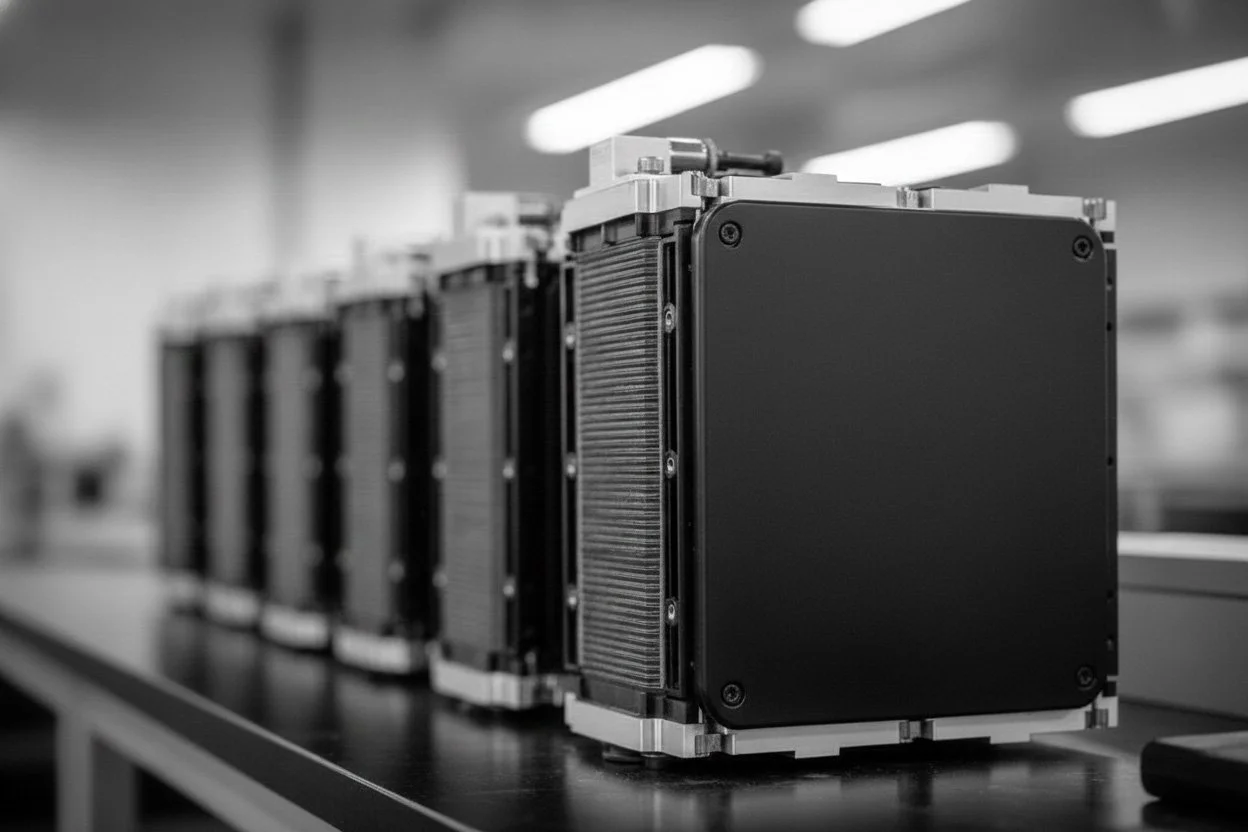
A hydrogen fuel cell is an electrochemical device that converts hydrogen into electricity without combustion. It pairs hydrogen and fuel (in this case, oxygen from the air) to create an electrical current, generating only water and heat as by-products.
This makes hydrogen fuel cells, also known as H fuel systems, attractive for organisations looking to combine renewable generation with reliable, distributed power.
For businesses developing decarbonisation strategies, fuel cells provide flexibility: they can be scaled up or down, run quietly and operate indoors or outdoors with minimal environmental impact.
Electrolysers and hydrogen fuel cells complement each other. One produces clean hydrogen, the other converts it into instant power – providing operations with self-sufficient energy systems.
How does a hydrogen fuel cell work?
One of the most common questions we hear from people is: how does a hydrogen fuel cell actually work?
Think of it like a controlled reaction inside a compact, layered device:
1. Hydrogen enters the anode.
Each hydrogen molecule (H₂) splits into electrons and protons.
2. Electrons move through an external circuit.
This movement creates electrical power that can run equipment, charge batteries or support a site’s energy load.
3. Protons travel through the membrane to the cathode.
In a fuel cell, the membrane only allows protons through, keeping the reaction stable and efficient.
4. Oxygen enters the cathode.
From here, the electrons and protons reunite with oxygen molecules on the cathode side.
5. Water and heat are released.
These are the only outputs produced by the reaction happening inside hydrogen fuel cells (which makes it one of the cleanest energy technologies available today!).
This controlled, continuous flow is what enables fuel cells to produce electricity as long as hydrogen is supplied.
Advances in PEM electrolyser design are enabling operations to produce green hydrogen on-site and use it directly in hydrogen fuel cells for clean, accessible power.
Types of hydrogen fuel cells
There are several hydrogen fuel cell types. Each are suitable for different applications.
PEM (Proton Exchange Membrane)
Fast-responding and compact, PEM technology is ideal for mobility, aviation, remote power and pairing with renewables. It is the most widely adopted technology for real-world deployments.
Endua utilises PEM electrolysis and manufacturers PEM electrolysers because it is better suited to dynamic renewable-powered green hydrogen production for use in fuel cells.
Alkaline Fuel Cells (AFCs)
Efficient, but sensitive to contaminants.
Solid Oxide Fuel Cells (SOFCs)
Designed for high-temperature applications and stationary power.
Phosphoric Acid Fuel Cells (PAFCs)
Commercial heat-and-power systems with reliable output.
Find out more: check out our comparison table of PEM vs. alkaline vs. AEM electrolyser technology.
Hydrogen fuel cells rely on a consistent, high-purity hydrogen supply, which is why many organisations are turning to PEM electrolyser systems to produce hydrogen on-site. PEM fuel cells remain the most versatile option for organisations that need clean, available power.
Why hydrogen fuel cells are gaining momentum
There are several factors accelerating global adoption, including:
zero emissions (when using green hydrogen)
high power density and consistent output
safe and quiet operation
ability to pair with solar or wind for renewable energy
modular design that supports microgrids, mobile assets and backup power
long-term cost efficiency as hydrogen production scales
direct replacement for diesel generators.
As hydrogen storage and green production technologies become more widespread, hydrogen fuel cells are becoming easier to deploy at practical, commercial levels.
Practical applications and real-world use cases of hydrogen fuel cells
Are industries currently operating hydrogen fuel cells? Yes!
Fuel cells are already being trialled or deployed in:
airports and aviation ground operations
construction and temporary power setups
industrial facilities with peak demand challenges
commercial buildings seeking emissions-free backup power
mobility applications including trucks, buses, drones and boats
data centres to support power demand and back up power needs.
Their combination of reliability and clean output often makes them a better choice than diesel generators or internal combustion systems.
Learn more about Endua’s real-world electrolyser and power bank deployment at Archerfield Airport and Endua’s deployment as part of the PepsiCo Greenhouse Accelerator Program (APAC).
Challenges and what’s changing
Early barriers to hydrogen fuel cell use include cost, materials, hydrogen availability and manufacturing complexity. But these are shifting quickly as new supply chains grow, governments invest in electrolyser scaling, and technology manufacturers and suppliers, like Endua, focus on simpler, safe designs.
What’s improving the business case for hydrogen fuel cell deployment? Efficiency gains, improved durability and declining hydrogen production costs are making hydrogen fuel cells and electrolyser technology more accessible.
Looking ahead
Hydrogen fuel cells offer a pathway for industries and organisations to achieve dependable clean energy during a critical decade.
With better integration into distributed energy systems, growth in green hydrogen production and falling component costs, hydrogen fuel cells are positioned to become a cornerstone technology for industrial decarbonisation.
Hydrogen fuel cells provide a practical way to turn clean hydrogen into instant power without emissions or noise.
As organisations rethink their energy sources, this technology is becoming one of the most promising tools for delivering reliable, renewable-ready power at scale.
Interested to learn more about hydrogen fuel cells and electrolyser technology?
If you’re exploring clean, reliable power solutions, Endua’s PEM electrolyser technology offers a practical pathway to scalable hydrogen generation. Find out more about Endua’s advanced, Australian-manufactured PEM electrolyser, PEM electrolyser technical specifications, or get in touch to see how we can support your energy strategy.