
How to choose PEM electrolysers in India for 2026
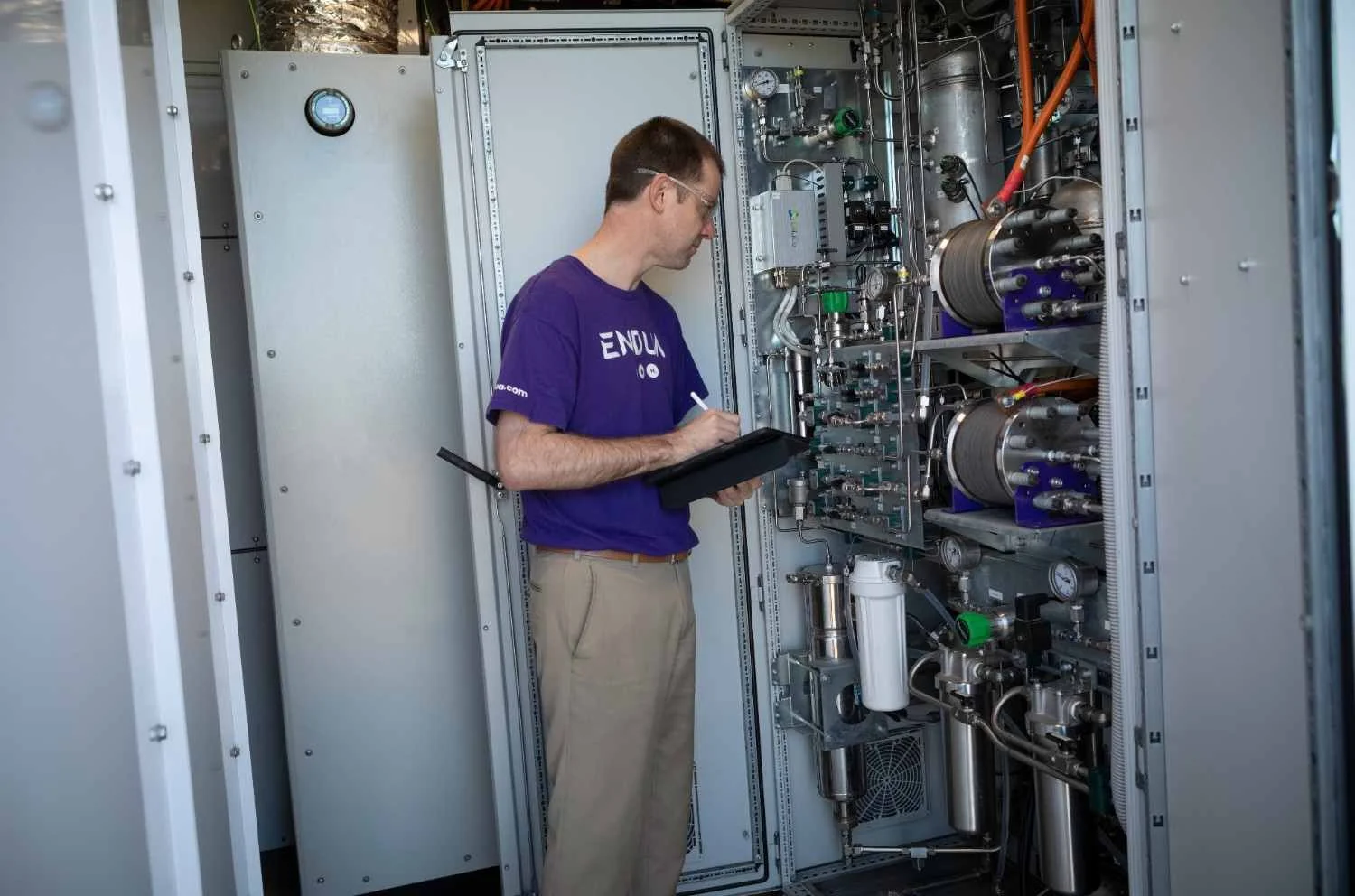
- PEM electrolysers respond faster to power fluctuations than alkaline systems, making them better suited for India's variable renewable integration.
- Efficiency ratings between 50-60 kWh/kg H₂ represent the current commercial range, with system design affecting real-world performance.
- Pre-engineered systems from suppliers like Endua can reduce deployment timelines from years to months, helping to address procurement bottlenecks.
- On-site hydrogen production can reduce supply chain vulnerabilities associated with centralised production and delivery.
- Hydrogen produced in compliance with India’s Green Hydrogen Certification Scheme (GHCI) and systems designed and certified against recognised standards (such as ISO 22734 and relevant IEC 62282 fuel‑cell/electrolyser standards) can demonstrate compliance capability that supports alignment with Indian requirements.
Industrial decarbonisation in India faces a specific constraint: variable grid conditions and fluctuating renewable power output make traditional electrolyser deployments difficult to optimise. For utility-scale and industrial green hydrogen electrolysers, selecting the right technology determines whether a project achieves its production targets or struggles with equipment cycling and reduced efficiency.
This guide covers the technical and commercial criteria that are important when selecting PEM electrolysers in India. We’ll cover decision frameworks for evaluating deployment timelines, efficiency specifications, grid integration and compliance requirements specific to the Indian market.
Why PEM electrolysis suits India's grid conditions
India's power grid presents specific challenges for hydrogen production. Renewable energy curtailment reached significant levels in states with high solar and wind penetration. Grid frequency variations and intermittent power supply require electrolysers that can adjust production rates dynamically.
PEM electrolysers operate with faster response times than traditional systems. They can ramp from cold start to full production in minutes rather than hours. This capability matches the output profile of solar photovoltaic installations, which dominate India's renewable capacity additions.
The solid polymer membrane in PEM systems allows operation at higher current densities (1 to 3 A/cm²) compared to traditional systems (0.2 to 0.4 A/cm²). This translates to smaller equipment footprints for the same hydrogen output, a practical advantage for industrial sites with space constraints.
What technical specifications matter for electrolyser selection
Efficiency and energy consumption
Specific energy consumption measures how much electricity an electrolyser uses to produce one kilogram of hydrogen. Current PEM systems operate in the 50-60 kWh/kg H₂ range. Lower values indicate higher efficiency, but real-world performance depends on operating conditions, system design and load profiles.
Endua's PEM electrolyser systems deliverhydrogen purity of 99.999% with modular configurations from 125 kW to 5 MW. This scalable range addresses both pilot-scale demonstrations and commercial deployments.
Operating pressure and hydrogen delivery
Electrolysers can deliver hydrogen at pressures ranging from near-atmospheric to 30 bar or higher. Higher delivery pressure reduces downstream compression requirements, which can represent substantial capital and operating costs.
Systems designed for 30 bar delivery pressure can reduce downstream compression requirements for many industrial applications. This simplifies the balance-of-plant and reduces system energy consumption and potential leak points in the system.
Water quality and consumption
PEM electrolysers require high-purity water to protect membrane integrity and prevent catalyst poisoning. Systems with integrated water treatment can accept potable water input, reducing the need for separate demineralisation infrastructure. Pure water consumption rates are typically around 9–12 L/kg H₂ for the electrolysis process, with total site demand varying by cooling and balance-of-plant design.
How to evaluate deployment timelines and project risk
Traditional electrolyser projects typically follow engineering, procurement and construction (EPC) timelines of 18 to 36 months or more. This extended duration can create financing challenges and delay revenue generation. Market conditions and policy frameworks can also shift substantially during such periods.
Pre-engineered, factory-tested systems can compress deployment timelines significantly. Endua's approach can allow systems to be installed in days, with full project deployment often measured in months instead of years. This can make a difference in projects targeting specific policy windows or offtake agreements with defined start dates.
Site preparation requirements
Electrolyser deployment requires site preparation including electrical infrastructure, foundations, and connections to water and gas systems. Pre-engineered systems minimise on-site construction by integrating balance of plant components within the delivered package.
Outdoor-rated systems eliminate the need for dedicated buildings, further reducing civil works. Operating temperature ranges of 5-45°C cover most Indian deployment conditions without additional climate control.
What grid integration options exist for Indian projects
Direct renewable coupling
Electrolysers connected directly to dedicated solar or wind installations can operate independently of grid infrastructure. This configuration requires oversizing renewable capacity to meet hydrogen production targets within available generation hours. Hydrogen storage provides buffer capacity between production periods.
PEM systems excel in this configuration because they track power fluctuations without the thermal cycling stress that affects other technologies. Dynamic turndown capability allows production to match available power from near-zero to full capacity.
Grid-connected operation
Grid-connected electrolysers can draw power continuously, achieving higher utilisation than directly coupled off-grid renewable systems. Power purchase agreements with renewable generators support green certification while grid operation can help manage supply variability.
India's National Green Hydrogen Mission establishes frameworks for renewable energy certificates and green hydrogen certification. Projects should evaluate how their grid connection approach affects eligibility for policy incentives.
If the project’s goal is to maximise the use of any on-site renewable energy, irrespective of the grid connection, technology must be chosen that can dynamically ramp up and down at the same rate as the renewable energy source. PEM electrolysers are best placed to manage this variability.
How compliance standards affect technology selection
Electrolyser installations must meet safety and performance standards across multiple domains: electrical systems, pressure equipment, hazardous area classification, and hydrogen-specific requirements. Non-compliance creates project delays and potential liability exposure.
Key standards for Indian deployments include:
IEC and ISO standards for electrolyser systems
National electrical codes and hazardous area regulations
Pressure equipment standards for hydrogen storage and delivery
Gas monitoring and safety system requirements
Hydrogen produced in compliance with India’s Green Hydrogen Certification Scheme (GHCI) and systems designed and certified against recognised standards (such as ISO 22734 and relevant IEC 62282 fuel‑cell/electrolyser standards) can demonstrate compliance capability that supports alignment with Indian requirements. Factory testing and quality documentation reduce on-site commissioning and certification timelines.
What total cost of ownership factors matter most
Capital expenditure components
Electrolyser capital costs include the stack, power electronics, balance of plant, civil works and installation labour. Current market pricing for PEM systems varies for installed systems based on system size, configuration and regional factors.
Modular systems reduce project-specific engineering costs by standardising designs across deployments. This approach also enables faster quotation and procurement compared to custom-engineered installations.
Operating expenditure drivers
Electricity cost dominates electrolyser operating expenses, typically representing 60-80% of hydrogen production cost. System efficiency directly affects this line item. A difference of 5 kWh/kg H₂ between systems translates to meaningful cost variation over project lifetimes.
Stack replacement intervals affect long-term operating costs. PEM systems can exceed 80,000 operating hours before requiring stack replacement under ideal conditions, with cycling and water quality affecting actual service life.
How to assess supplier capability and support
Technology validation and testing
Suppliers can demonstrate system performance through documented testing programmes. Run hours accumulated under realistic conditions indicate reliability more accurately than laboratory specifications. Systems with 30,000+ hours of testing across multiple prototypes and deployments can provide strong evidence of commercial readiness.
Endua's electrolyser technology combines 15 years of CSIRO research and development with extensive testing under real operating conditions. Deployments at sites like Archerfield Airport demonstrate performance in commercial settings, not just controlled environments.
Regional presence and support capability
Equipment suppliers with Asia-Pacific presence can respond faster to commissioning support and spare parts requirements. Local manufacturing or regional partnerships can reduce lead times and currency exposure compared to distant suppliers.
Systems designed for remote operation with cloud monitoring can reduce the need for on-site technical staff. Back-to-base communication capability can enable performance monitoring and troubleshooting without site visits.
What application requirements influence electrolyser selection
Industrial feedstock applications
Refineries, chemical plants, and steel facilities require consistent hydrogen supply with specific purity levels. On-site production can match production schedules without the variability of delivered hydrogen. Industrial facilities can integrate electrolysers with existing power infrastructure and water treatment systems.
Green hydrogen credentials are increasingly affecting tender competitiveness and regulatory compliance in these sectors. On-site production from renewable sources provides clear attribution compared to purchased hydrogen with mixed or uncertain origins.
Mobility and transport applications
Hydrogen refuelling stations for buses, trucks and other vehicles require production capacity matched to fleet size and utilisation patterns. Station-level production eliminates tube trailer logistics and associated scheduling constraints.
Compression and storage systems must interface with electrolyser output. Systems delivering hydrogen at higher pressure reduce compression requirements and improve overall station efficiency.
Remote and off-grid applications
Mining operations, telecommunications sites and agricultural facilities often lack reliable grid connections. Hydrogen provides energy storage capability that extends beyond battery limitations for long-duration applications.
Compact, outdoor-rated systems deploy without requiring dedicated buildings or extensive site infrastructure. Remote locations benefit from pre-built stand-alone equipment where construction resources can be limited and costly to mobilise.
How to structure the evaluation and selection process
Step 1. Define hydrogen demand profile
Calculate daily and annual hydrogen requirements based on application needs. Consider seasonal variations, growth projections, and potential additional uses. Express requirements in kg/day and kg/year to enable supplier comparisons.
Step 2. Characterise available power supply
Document grid connection capacity, renewable generation profiles, and power quality characteristics. Identify constraints including voltage levels, frequency stability, and available connection points. This information determines electrolyser sizing and configuration options.
Step 3. Assess site constraints
Survey available footprint, access for equipment delivery, and proximity to water and power connections. Identify hazardous area classifications and setback requirements. Site constraints can eliminate certain system configurations from consideration.
Step 4. Develop technical specifications
Create a specification document covering hydrogen output, purity, delivery pressure, efficiency targets, and compliance requirements. Include operating environment conditions and interface requirements with existing systems.
Step 5. Request and evaluate proposals
Issue specifications to qualified suppliers and request detailed technical and commercial proposals. Evaluate responses against weighted criteria covering performance, cost, schedule, and risk factors.
What market developments affect 2026 project planning
India's National Green Hydrogen Mission targets 5 million tonnes of annual production capacity by 2030. The Strategic Interventions for Green Hydrogen Transition (SIGHT) programme provides incentives for domestic electrolyser manufacturing and hydrogen production. Multiple states have formulated green hydrogen policies with specific targets and incentive frameworks.
Electrolyser manufacturing capacity in India is expanding through both domestic development and international partnerships. This growth should improve equipment availability and reduce lead times for projects planned in 2026 and beyond.
Cost trajectories are expected to continue downward as manufacturing scales and technology improves. Projects should evaluate whether near-term deployment captures current incentives or whether waiting for cost reductions provides better economics.
Endua works with industrial operators in India to deliver PEM electrolyser systems in line with hydrogen demand profiles and deployment timelines. Get in touch to discuss your project requirements.
FAQs about how to choose PEM electrolysers in India for 2026
What makes PEM electrolysers better for variable power input?
PEM electrolysers respond to power changes within seconds rather than minutes. The solid polymer membrane handles rapid cycling without the thermal stress that affects systems using liquid electrolytes. This capability matches solar and wind generation profiles that characterise India's renewable additions.
How long does electrolyser deployment typically take in India?
Traditional EPC projects typically require 18-36 months from contract to operation. Pre-engineered systems like Endua's electrolyser can reduce this timeline from years to months by delivering factory-tested, integrated systems that minimise on-site construction and commissioning.
What hydrogen purity levels do industrial applications require?
Fuel cell applications typically require 99.97-99.999% purity. Industrial feedstock applications may accept lower purity depending on process requirements. Endua's PEM electrolysers deliver 99.999% purity, meeting the most demanding application requirements without additional purification.
How does on-site production compare to delivered hydrogen costs?
Delivered hydrogen includes production, compression, transport, and handling costs that can double or triple the production cost. On-site hydrogen production with electrolysers like Endua's systems eliminates supply chain costs and provides predictable pricing based largely on electricity rates.
What maintenance requirements do PEM electrolysers have?
PEM systems require periodic stack inspection and eventual replacement at 60,000+ hour intervals. Water treatment system maintenance and calibration of safety systems represent ongoing requirements. Remote monitoring capabilities reduce the need for on-site technical and operational staff.
Can electrolysers operate with untreated water?
PEM electrolysers require high-purity water to protect membranes and catalysts. Systems with integrated water treatment, like Endua's electrolyser, accept potable water input and handle purification internally. This eliminates the need for separate water treatment infrastructure on site.
What safety certifications should electrolyser systems have?
Systems should comply with electrolyser standards (IEC/ISO), electrical safety codes, pressure equipment regulations, and hazardous area requirements. Endua electrolysers are designed and manufactured to meet local, regional and international standards applicable to each project.
How do modular systems support project scaling?
Modular electrolysers allow capacity additions by installing additional units, rather than replacing existing systems. Endua's modular design supports projects from 125 kW to 5 MW through standardised units that share common interfaces and control systems.