
Local hydrogen fuel security for heavy transport
Power your fleet: From trucks to refuelling terminals with Endua’s APAC-based hydrogen solutions
Take control of your transport energy future
Heavy vehicles face escalating supply chain risk, strict emissions targets, and pressure for operational uptime. As heavy vehicle fleet operators look to transition to low emission hydrogen alternatives, new infrastructure challenges arise for access to hydrogen and refueling sites. Endua’s on-site hydrogen generation gives fleets the autonomy, reliability, and rapid rollout needed to thrive in APAC’s dynamic market.
Technology built for real fleet needs

CSIRO-driven innovation
25,000+ hours of proven reliability, engineered for real APAC industrial environments.

Scalable efficiency
Plug into existing operations or start greenfield – Endua makes adoption straightforward.

Seamless integration
Systems sized for city, regional, and remote depots – expand capacity as your hydrogen fleet grows.
Why Endua makes fuel security real
Local fast deployment

Set up and commission in weeks for Australian and Asia Pacific markets, outpacing distant global solutions.
On-site autonomy

Produce hydrogen in your own yard, depot or terminal. Stay resilient against global supply disruptions.
Reliable support

Partner with Australian experts for system integration, testing and long-term service – enabling your operational uptime.
Futureproof compliance

Ready for regulatory changes and ESG tender requirements, without the complexity and delays of traditional solutions.
The power behind heavy vehicle operations
Endua hydrogen directly powers:
Ready to energise your fleet with secure, local hydrogen?
Book a tailored fleet assessment today. Discover how depot hydrogen can unlock supply control, resilience, and next-level compliance for your heavy vehicles.
Complete operational independence from imported fuels.
Practical zero-emission strategies with APAC expertise.
Fast, local deployment and ongoing support.
Contact our team to start your transition and lead with confidence.
FAQs
-
On-site hydrogen production gives fleet operators direct control over fuel supply. Instead of relying on imported diesel or third-party hydrogen deliveries, hydrogen is generated at your depot or terminal using water and electricity. This reduces exposure to price volatility, transport delays and supply chain disruptions.
For heavy transport operations where uptime is critical, producing fuel where it’s used strengthens route planning certainty, stabilises operating costs and reduces the risk of operational interruptions caused by external energy markets.
-
Hydrogen production systems can be configured to suit a wide range of operating environments – from urban logistics hubs to remote mining corridors and regional freight depots.
In metropolitan settings, on-site hydrogen supports growing zero-emission fleets without dependence on shared public infrastructure. In remote or regional locations, it eliminates long fuel supply chains and reduces the risk of delivery delays. Systems can be sized to match fleet demand and expanded over time as hydrogen vehicle adoption increases.
-
Integration typically includes hydrogen production (electrolysis), storage, compression (if required) and dispensing infrastructure. Configurations can depend on fleet size, daily fuel demand, available power supply and site layout.
Hydrogen systems can integrate into existing depots with minimal disruption to ongoing operations. With proper planning, operators can phase implementation, enabling diesel and hydrogen vehicles to operate side by side during transition. Site assessments support safety, compliance and optimal system placement.
-
Hydrogen fuel cell vehicles offer refuelling times comparable to diesel, which can be critical for fleets operating tight schedules or long-distance routes. Battery-electric vehicles often require longer charging windows and may need significant grid upgrades for high-capacity charging infrastructure.
Hydrogen also provides higher energy density, making it well-suited to heavy-duty applications where payload, range, and fast turnaround times are essential. The right solution depends on duty cycle, route length and operational requirements, and in many cases hydrogen complements electrification strategies rather than replacing them.
In contrast to battery electric buses, where energy usage and demand correlate to time of charging, hydrogen can be produced while the vehicles are in use, and stored ready for when rapid refuelling is required.
-
Yes. Systems are modular and designed to grow alongside fleet demand. Operators can begin with capacity sized for pilot programs or early-stage hydrogen adoption, then expand production as vehicle numbers increase.
This staged approach reduces upfront capital exposure while preserving flexibility. It also supports long-term planning, allowing fleets to progressively transition without overbuilding infrastructure before it’s needed.
-
Deployment timelines depend on site readiness, permitting and system scale, but on-site hydrogen production can typically be commissioned much faster than building large, centralised supply chains.
With proper planning and local support, systems can be installed and brought online within months rather than years. This enables fleet operators to move from feasibility assessment to operational hydrogen supply in a timeframe aligned with vehicle procurement and emissions targets.
Resources
Download our free resources with expert advice, guidance and strategies for your hydrogen project.

7-Step guide to transition to hydrogen vehicles
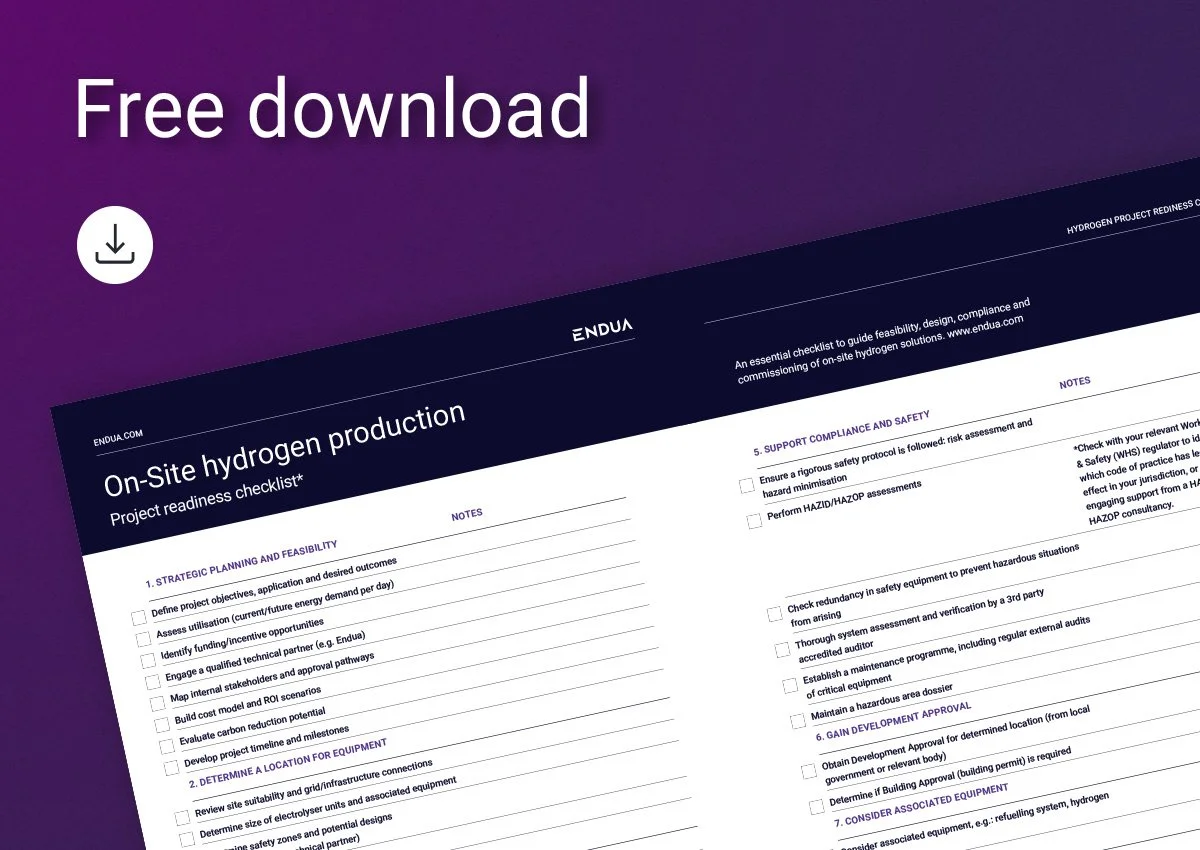
On-site hydrogen production checklist